Restorative practices offer schools a relationship-centered approach to discipline, emphasizing accountability and repairing harm over punishment. Instead of asking, “What rule was broken?” the focus shifts to who was affected and how the community can move forward together.
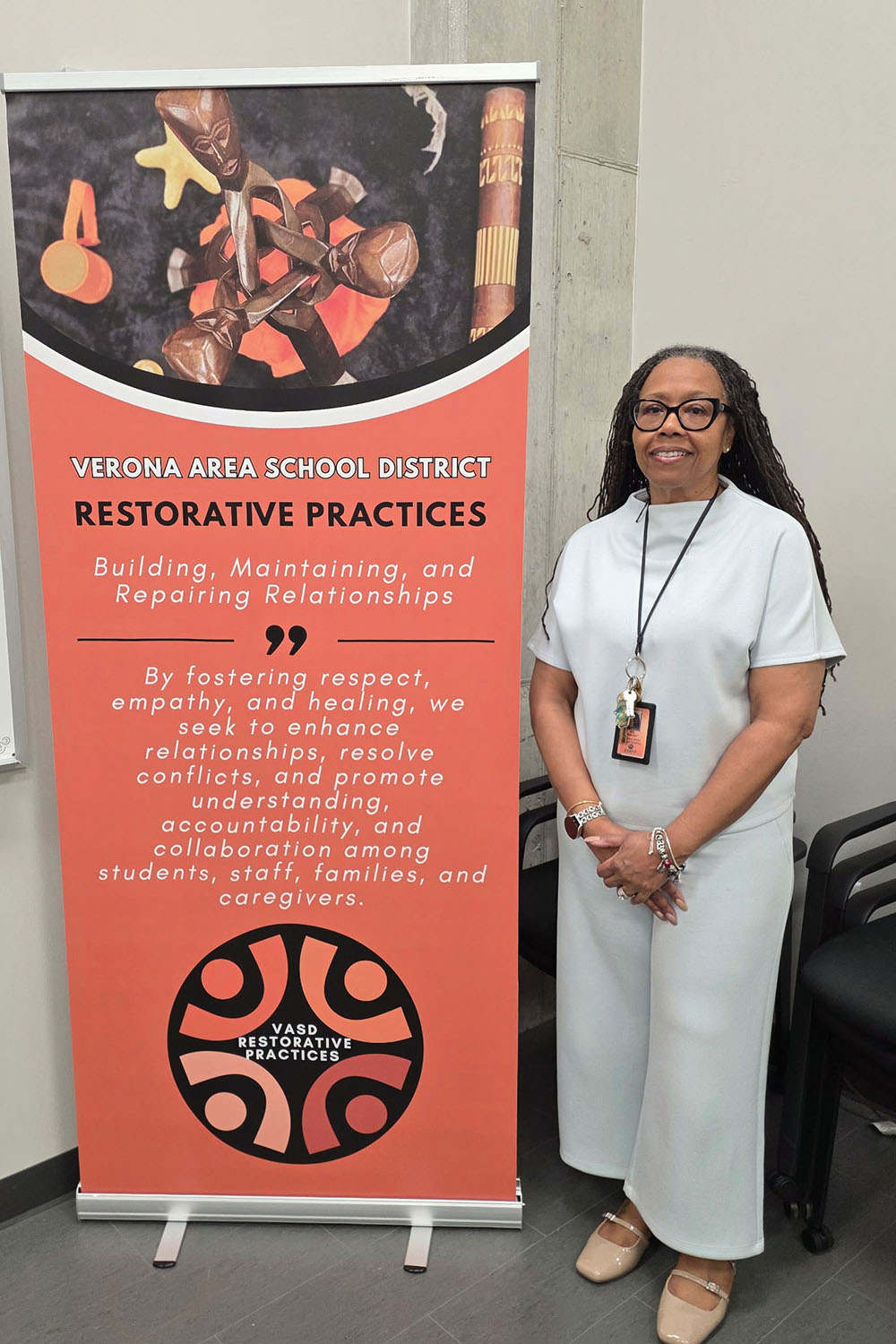
At Verona Area School District, which consists of 10 schools and serves approximately 5,800 students, faculty and students are embracing restorative practices with the aim of creating safer, more equitable school environments where students develop conflict resolution skills and a stronger sense of belonging, improving overall school culture and student outcomes.
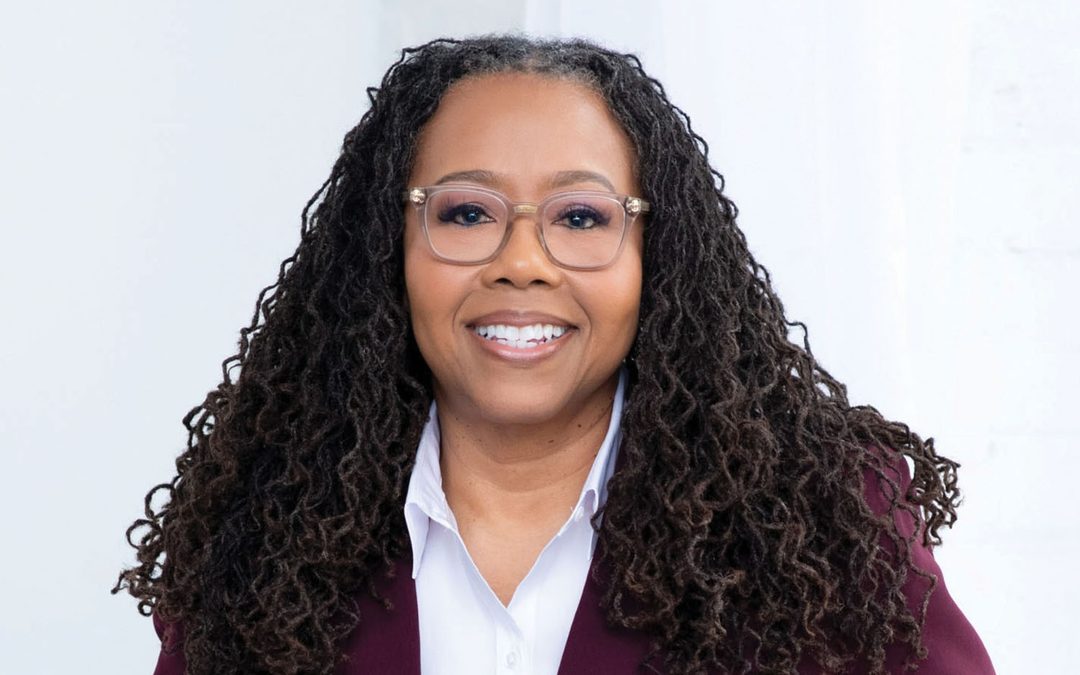
“Restorative practices is a way of being,” said Restorative Practices Coordinator Zeeland Walsh, who oversees the district’s program. “To truly be restorative, it must be a part of who you are and how you go about the things that you already do.”
Walsh joined the Verona Area School District in 2019, moving to Madison with her husband, William, from Milwaukee, where she worked within the Milwaukee Public School system for 23 years—as a classroom teacher for grades K-12, then as a reading specialist and, finally, as a restorative practices coach.
“I’ve always wanted to work with students, especially challenging students who need additional support,” said Walsh.
This aspiration stayed with her as she took classes to become a reading instructor. During her studies, she read “Touching Spirit Bear,” a 2001 young adult novel by Ben Mikaelsen, that introduced Walsh to restorative practices in a traditional Indigenous way.
“The story caused a light bulb to go off in my mind,” she said. “It modeled some of the things I was applying and wanted to do more of in my role as a classroom teacher.”
In the Verona Area School District, she was originally hired as an interventionist, ensuring students who weren’t doing well during the COVID-19 pandemic felt supported once they were back in the building. This experience helped her move into the role of restorative practices coordinator in the 2023/24 school year.
“When I came to the district, people weren’t aligned around restorative practices,” Walsh said. “Some called it restorative justice, others called it restorative practices, and the role looked different from school to school. I saw an opportunity to bring more cohesion to the program—for the benefit of the district and, ultimately, the students.”
Building relationships before repairing harm
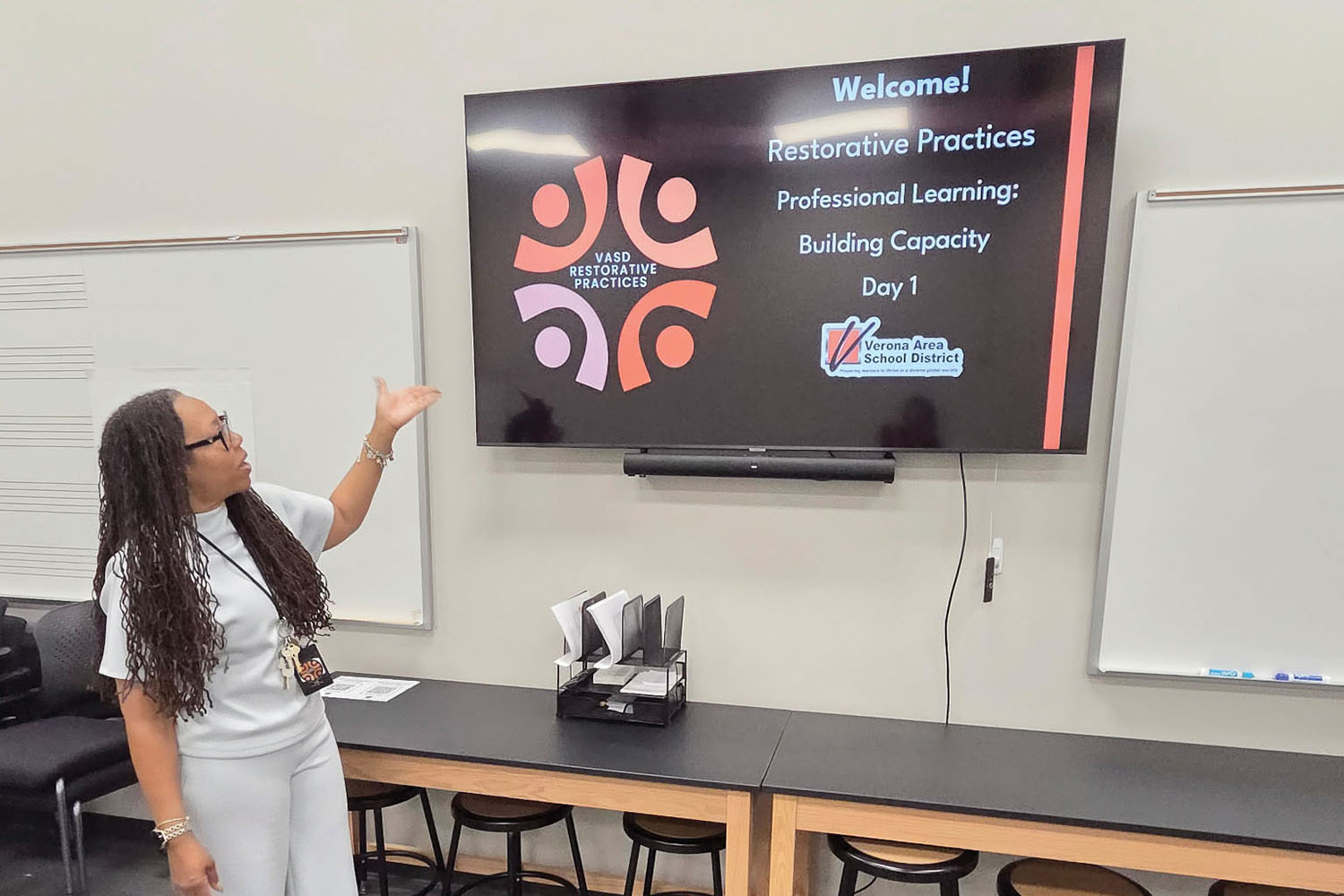
Today, Walsh oversees the work of three full-time restorative practices specialists: one at Badger Ridge Middle School, one at Savanna Oaks Middle School and one at the high school.
When it comes to conflict resolutions, Walsh’s main goal is to do less conflict resolution and more building and maintaining relationships.
“People often focus on restorative justice without recognizing the importance of restorative practices,” Walsh explained. “Justice repairs harm, but practices build the relationships that make repair possible.”
Focusing on restorative practices helps people grow together in a professional relationship, whether it be with colleagues, supervisors, students or families. When relationships are built and maintained, if a conflict occurs, there’s something to repair because there’s an established relationship.
Walsh emphasizes that building relationships takes time.
“Relationships don’t grow overnight,” she said. “You have to put in the work and take the time restorative practices require—to slow down, see the humanity in people and genuinely get to know them. That means asking how they’re doing and staying curious, so we’re not making assumptions based on our biases but allowing people to show us who they are beneath the surface.”

Guiding adults through restorative work
While the district’s restorative practices specialists work directly with students, Walsh focuses on adults—training staff and supporting staff-to-staff and staff-to-family relationships. She aims to help others use a restorative lens to build community.
For example, if two teachers aren’t getting along, they may need to get to know each other better and understand their common goals.
“It’s easy to point fingers when you don’t understand where someone is coming from,” Walsh said. “You have to spend enough time together to get to know each other on a deeper level.”
When conflict arises, Walsh first meets with each person individually to gauge their willingness to participate and guide them through restorative questions. If both agree to meet, she asks those questions again with everyone present, honoring confidential conversations while encouraging each person to share openly, understand the other’s perspective and begin rebuilding trust.
Most incidents are not one-and-done. Walsh continues to check in with both parties
to make sure that they’re following established agreements, and often they need to come back together for additional discussions.
Restorative practices benefit adult and student mental health alike.
“When conflict isn’t resolved, when the person who was harmed isn’t made whole, it stays there, and the person who caused the harm never gets an opportunity to fix it,” explained Walsh.
In an organization not steeped in restorative practices, when a student gets suspended for a fight, others don’t check in or wrap their arms around that person who caused the harm. Instead, they focus on the person who was harmed.
According to Walsh, a suspension isn’t going to make the person who was harmed feel any better. The issue is still there.
“When that student returns, reintegration should be thoughtful and intentional,” she said. “The person who caused harm needs a meaningful opportunity to repair that harm with the person who experienced it.”
Creating spaces where students belong
Restorative practices have changed Walsh’s life, from the way she interacts with people to how she shows up in a classroom.
“I was taught that good classroom management meant quiet students seated in rows, taking in what I was teaching,” she said. “But now I know students need room to be themselves. Sitting still and listening to me didn’t allow them to fully show who they are.”
Walsh began reshaping her classroom to reflect that belief, moving away from rows of desks toward a more welcoming space with comfortable seating and shared expectations. Rather than imposing rules, she worked with students to define the standards they would all be responsible for meeting.
“When they didn’t meet an expectation, it didn’t automatically mean suspension or detention,” she said. “We would talk about it and decide together on a consequence. The expectations were the standard, and my job was to provide the support students needed to meet them. It wasn’t just me helping the student reach the goal—it was everyone, including families.”
Walsh and the Verona Area’s restorative practices team are working to make restorative practices part of the district’s everyday culture—something felt the moment anyone walks through a school’s doors. Their goal is for students, staff, families and community members to feel the warmth and connection that defines the people inside.
Even after a long career in education, Walsh remains deeply inspired by restorative work because she knows what it can mean for a young person. It is the kind of belonging she once needed herself, and it now fuels her commitment to helping students and staff feel supported and able to bring their best selves into the learning environment.
That work requires intention and patience for everyone involved. Walsh sustains herself through her spirituality, the support of her husband and time spent shopping, traveling, wine tasting and golfing. By caring for herself, she is better able to care for the Verona Area School District community, helping students, staff and families build relationships that make schools more compassionate, welcoming places to learn.