

Dr. India Anderson-Carter loves delivering babies—and caring for the women bringing them into the world. As a physician in UW Health’s Department of Obstetrics and Gynecology, Anderson-Carter’s goal is to ensure women feel supported and unashamed to talk about their health.
“Women’s health should not be something we are embarrassed to talk about,” she said.
A native of Madison, Anderson-Carter dreamed of being a doctor since she was a child. Born with a chronic health condition, she spent plenty of time at doctors’ offices. She appreciated how her pediatrician made her feel like a normal kid, not letting her diagnosis hinder her abilities to participate in and explore the world.
After graduating from Vel Phillips Memorial High School, Anderson-Carter enrolled at UW-Madison, where she studied biology and Spanish. A Great PEOPLE Scholarship, designed to help Wisconsin students of color and economically disadvantaged backgrounds and first-generation college attendees pursue higher education, helped make that path possible. She embraced the opportunity and moved straight into medical school at UW’s School of Medicine and Public Health, followed by a four-year residency in obstetrics and gynecology.
Along the way, her purpose became more defined.
“While interviewing for medical school, I lost my grandma to uterine cancer,” she said. “Nobody in my family regularly went to the doctor or talked about their health. I wanted to change that.”
That loss pushed her to think more deeply about gaps in care, especially the silence that often surrounds women’s health. Around the same time, another discovery clicked into place. During her second year of medical school, Anderson-Carter found herself drawn to surgery. She loved anatomy and the precision of working with her hands.

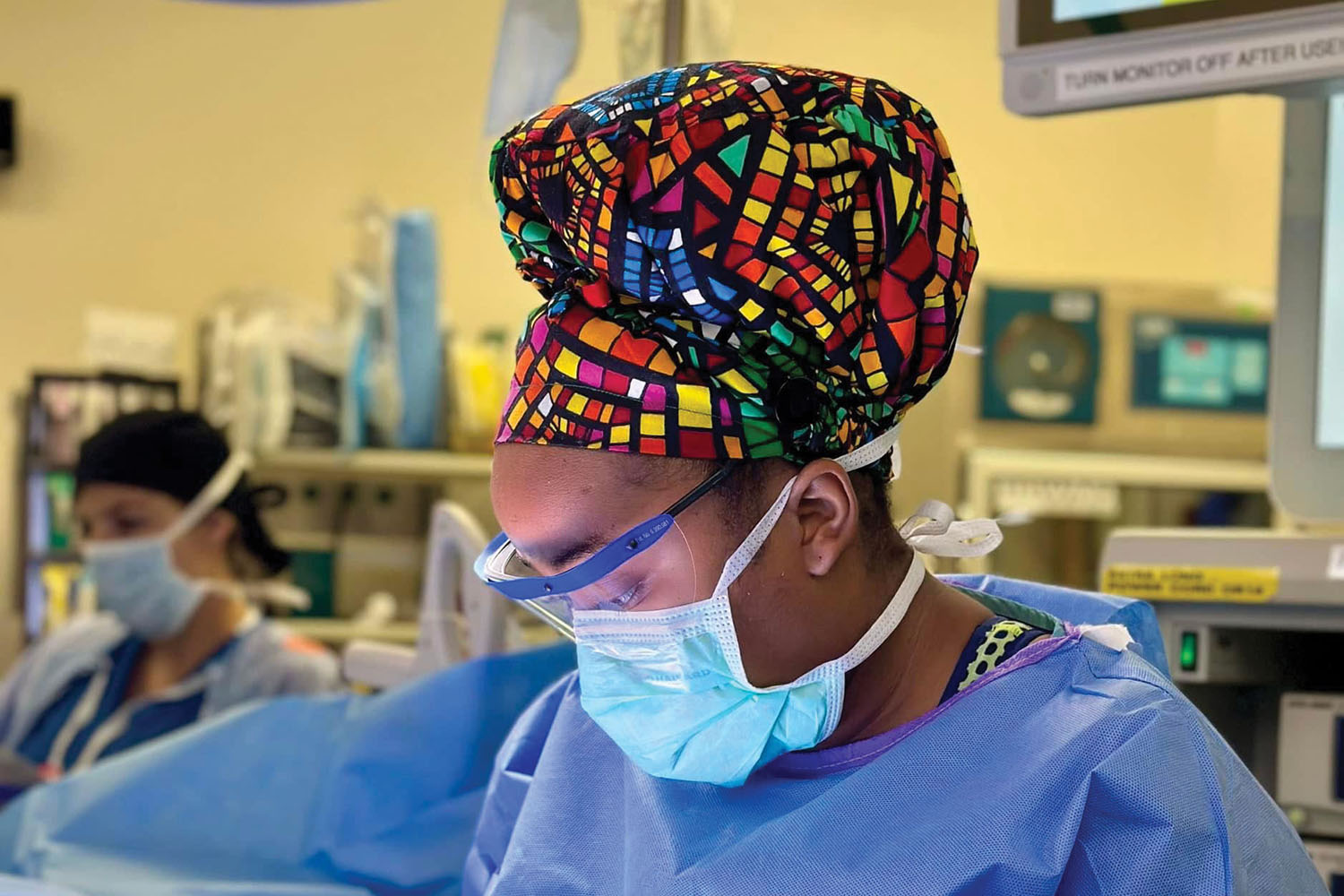
Her third-year rotations focused on obstetrics and gynecology. She realized this specialty area offered the surgical challenges she craved and the opportunity to help women. It also gave her a way to honor her grandmother’s memory. She committed fully to her training to deliver babies, perform C-sections and handle complex gynecologic surgeries.
In 2024, Anderson-Carter completed her residency and joined UW Health just two months later. Today, she serves as an assistant professor and practices the full scope of OB-GYN care. Her work spans outpatient visits at the Junction Road clinic and hospital-based care at Meriter Hospital, where she delivers babies and performs surgeries.
“Meriter has a very busy birthing center,” she said.
Her schedule reflects that pace. On surgical days, she wakes up at 5:30 a.m., arriving at the hospital by 7 a.m. Her first procedure begins shortly after, and she moves steadily from case to case until mid-afternoon. Then comes documentation—reviewing, writing and signing surgical notes—before wrapping up around 5 p.m.
Several weekends per month, she takes 12-hour, on-call shifts at Meriter Hospital. Those days revolve around labor and delivery, where no two hours look the same and every moment matters.
Despite the demanding schedule, Anderson-Carter remains deeply focused on connection. She cares for women at every stage of life, offering everything from routine gynecologic exams to prenatal and postnatal care, family planning and treatment for complex reproductive health conditions. She emphasizes prevention and education, making sure patients understand their options and feel confident in their decisions.
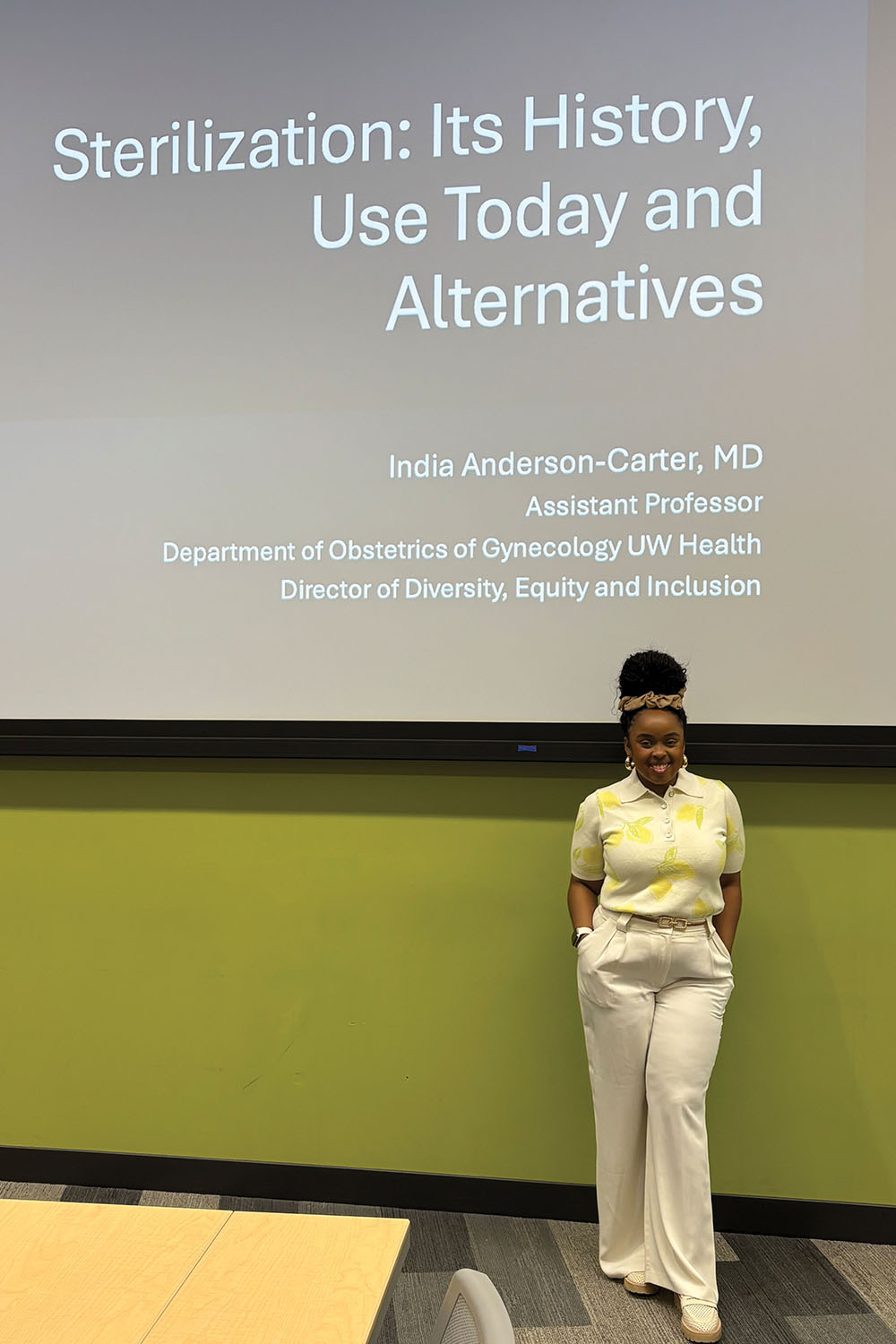

Beyond her clinical work, Anderson-Carter serves as the director of social impact and belonging for UW’s Department of Obstetrics and Gynecology. In this role, she leads the Social Impact and Belonging Committee and the department’s equity and inclusivity efforts through programming, initiatives and supporting the community in ways that advance wellbeing, health and equity.
For Anderson-Carter, practicing medicine in her hometown adds another layer of meaning. The community that once supported her now benefits from her care.
“The best part of what I do is pouring back into the community that invested in me,” she said.
She remembers that support clearly. Community members helped her buy textbooks during medical school. Others contributed to a GoFundMe to cover travel expenses when she was interviewing at medical schools as an undergraduate. Those gestures stayed with her—and continue to shape how she approaches her work.
Today, her passion extends beyond individual patient care. Anderson-Carter is building a career that includes research and advocacy, focusing on improving maternal health outcomes and challenging the stigma that still surrounds women’s healthcare.
“Women should not be afraid of dying during pregnancy or feel anxious to talk to their doctor about vaginal dryness, heavy bleeding or an inability to orgasm,” she said. “Women do not need to suffer alone.”
She knows these conversations can feel uncomfortable, but she also knows they’re necessary. In a field often shaped by politics and strong opinions, she remains grounded in her mission: making sure women have access to compassionate, informed care.
“Women deserve a voice,” she said.
And if speaking up feels too difficult, Anderson-Carter is ready to step in. Whether in the exam room, the operating room or the broader healthcare conversation, she continues to advocate for a future where women can live healthier, happier lives without fear or silence.