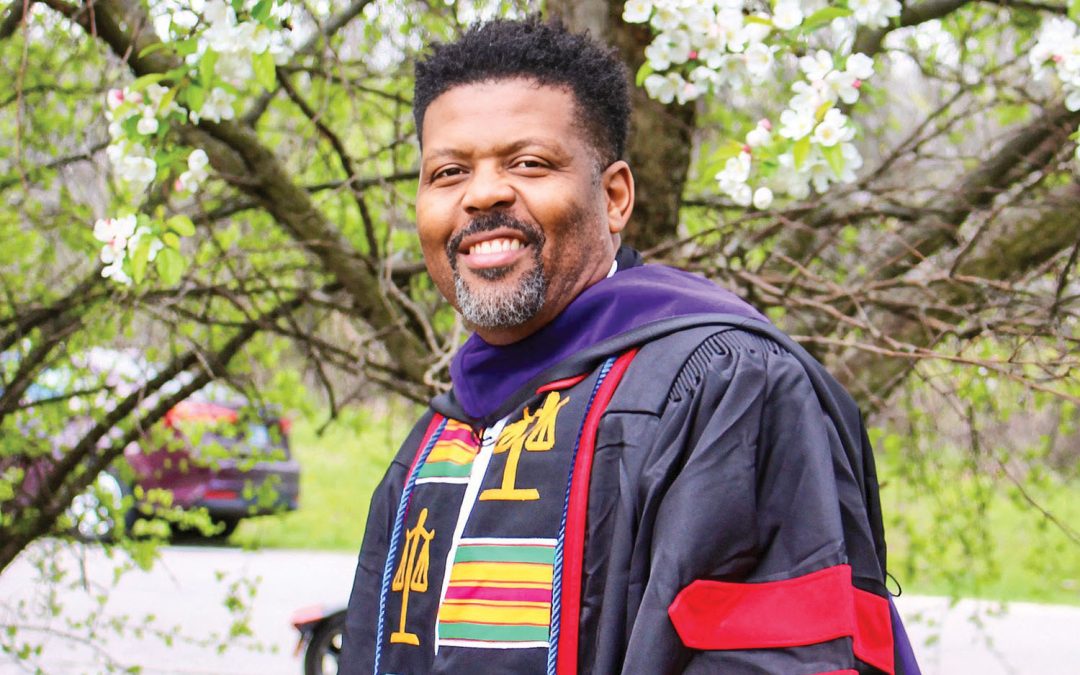
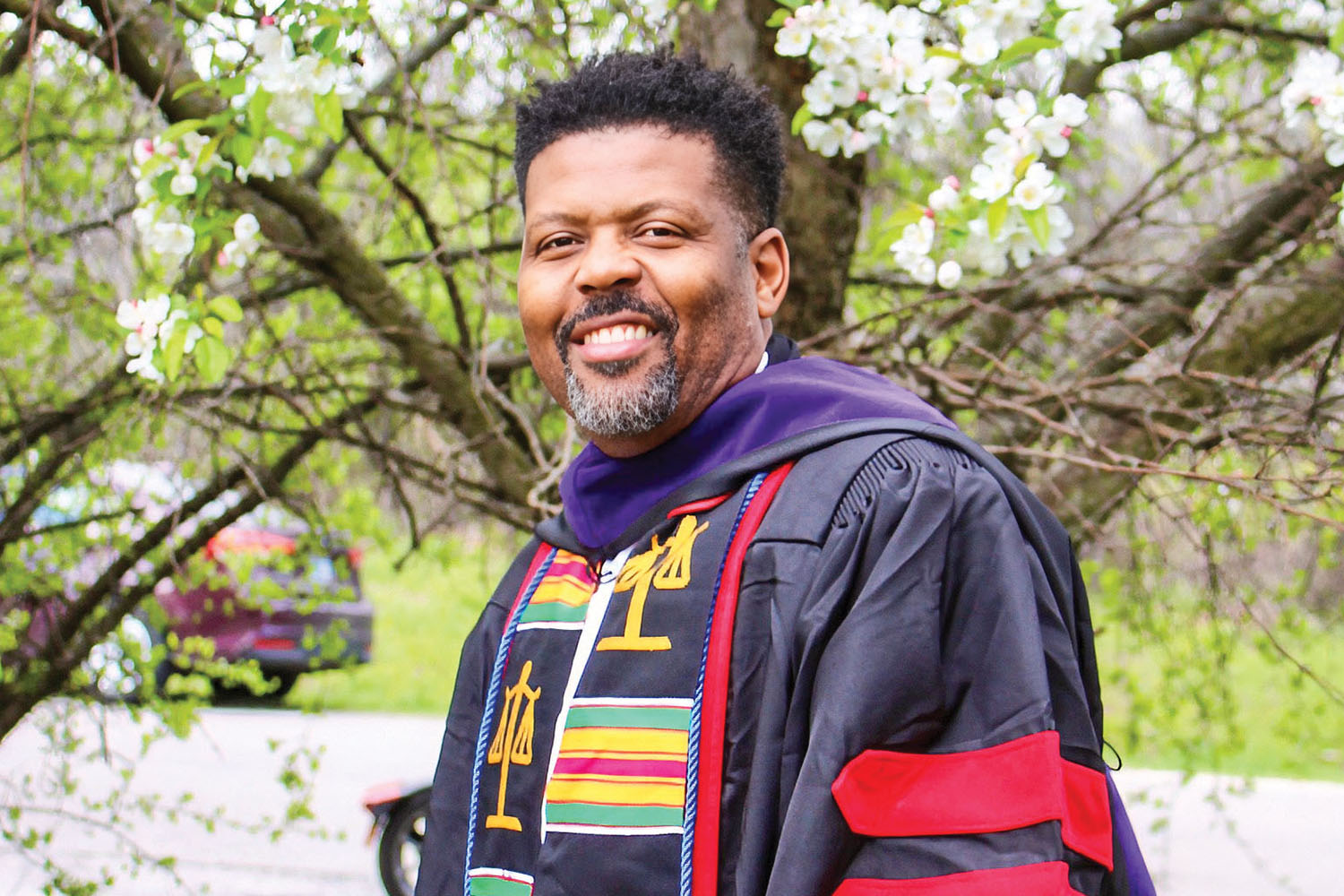
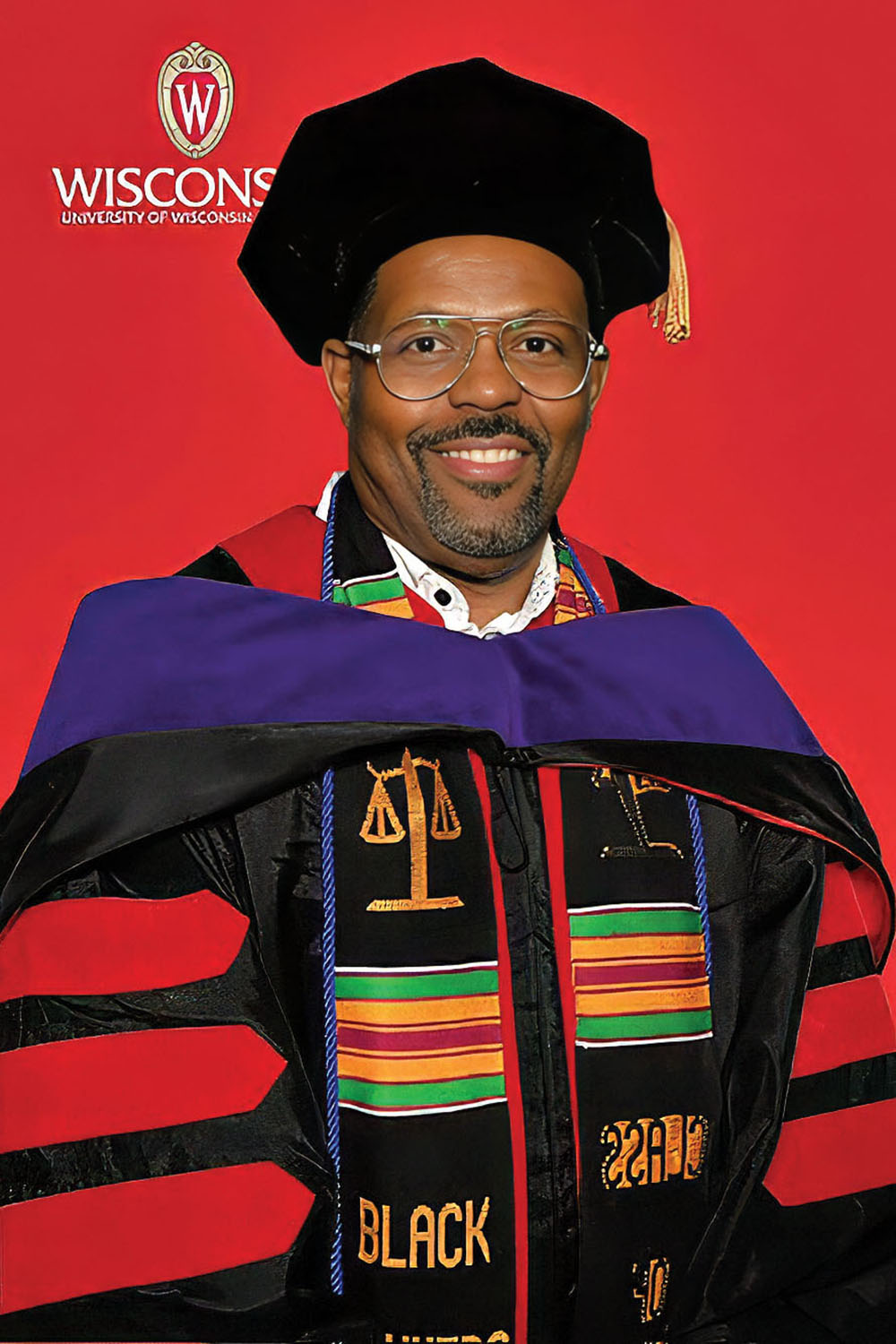
Crossing the stage to receive his UW law degree this month, Corey Saffold proudly wore a sash reading “Black Lawyers Matter.” Few seeing him now would know the obstacles he overcame to reach this milestone.
Corey Saffold grew up on the north side of Milwaukee. As a prospective first-generation college student, he lacked the guidance needed to pursue higher education. In school, he recalls being overlooked and not considered college material, even by those who were expected to encourage and support that path. Like many of his peers, he graduated high school without a clear plan.
At 17, Saffold faced a pivotal moment after finding himself on the wrong side of the law. What could have resulted in a life-altering outcome instead became a turning point. A detective chose not just to enforce the law but to explain its consequences, offering education, accountability, and a chance to choose a different direction. Saffold took that opportunity seriously. He made a deliberate decision to change the trajectory of his life and to one day create that same turning point for others.
He went on to become a police officer, where his work extended far beyond enforcement. Through mentorship, public speaking, and his involvement with student organizations such as the Black Student Union, Saffold focused on reaching young people before their defining moments became permanent consequences. “To this day, I think about how different my life could have been,” Saffold reflects. “Everything I’ve been able to do, serving as an officer, mentoring students, speaking to communities, came from someone taking the time to educate instead of simply punish.”
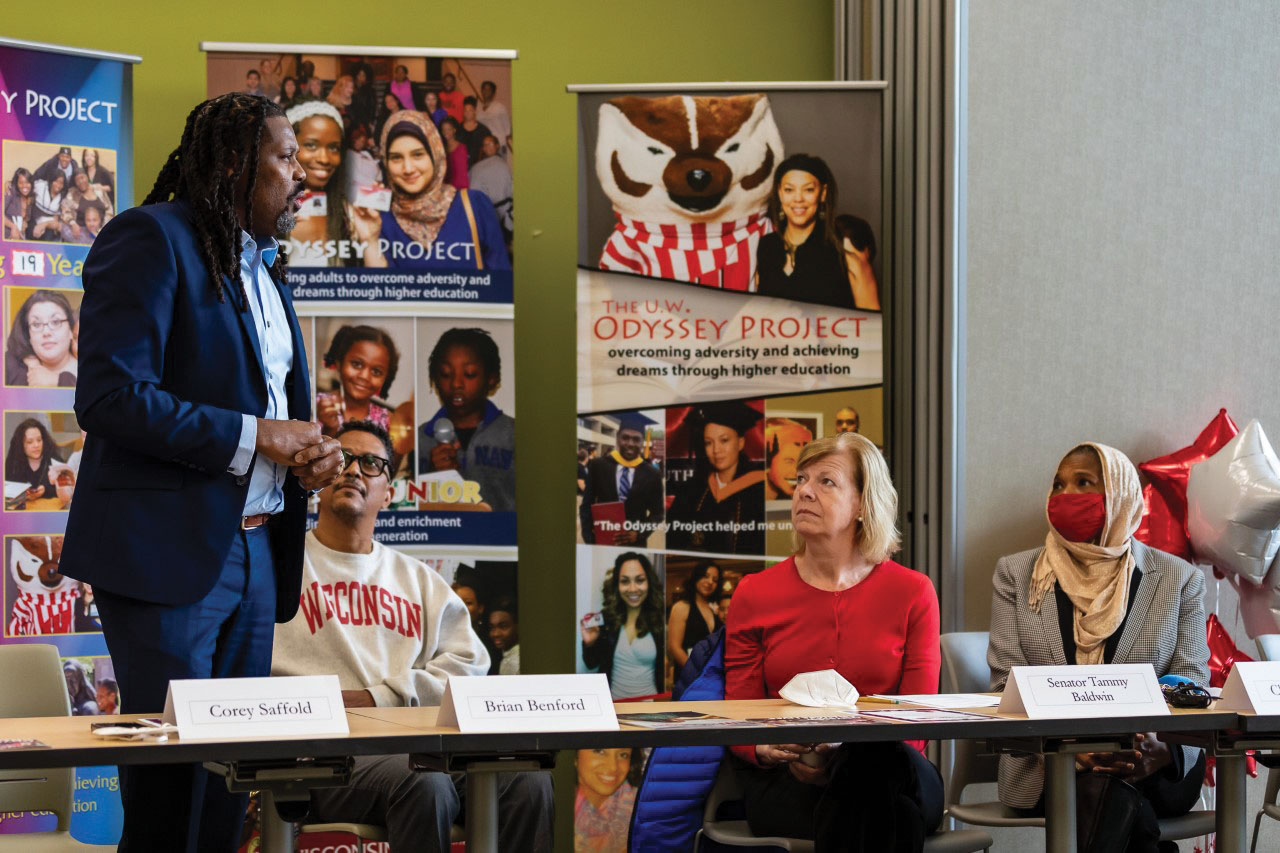
Another transformational change came when Saffold was accepted into the UW Odyssey Project, a free jumpstart college humanities course for adults facing economic barriers to college. “Odyssey was the exact opposite of my life growing up,” Saffold observes. “Odyssey had expectations that I would pursue higher education. It expected greatness and brilliance, and it had a way of pulling them out of me. Odyssey was life-changing for me because it helped me find my voice. When you know there are people who believe in you and expect you to do great things, and also provide resources to help you accomplish those things, it’s a game-changer. And it’s generational: my daughter later attended Odyssey, and my grandson was in Odyssey Junior.”
While in the Odyssey Project, Saffold published his editorial called “Education Must Trump Prison Time” in The Wisconsin State Journal. This piece opens with a quote from Frederick Douglass about justice and asks, “Why is Wisconsin ranked number one in locking up Black men and nearly last in graduating them from high school? Can you see the connection? It seems as if there’s a systematic plan in place for Blacks, especially Black men, to fail rather than succeed.” The late Wisconsin Supreme Court Chief Justice Shirley Abrahamson praised Saffold’s editorial as having spoken truth to power. Saffold cites this as another eye-opening moment: “I realized that this voice to speak, this voice to be bold and to be confident in the issues that are so near to my heart, is the voice I found in the Odyssey Project. All it takes is for one person to say, ‘I see the greatness in you, and I’m going to help pull the greatness out of you, and you are going to be somebody. You are going to change this world.’”

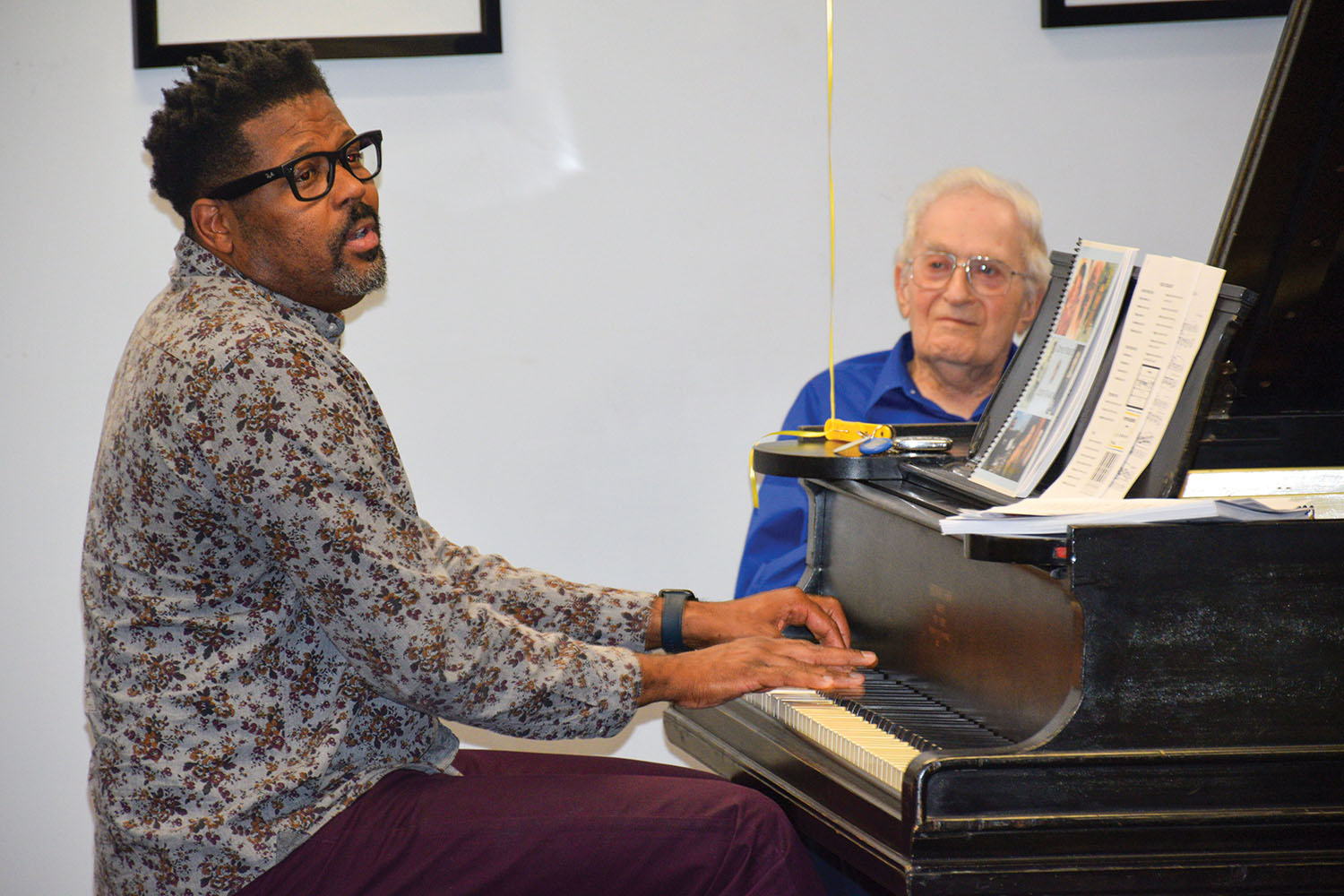
Saffold served as a Madison Police Officer while completing his bachelor’s in legal studies from UW-Whitewater. During that time, he also served as a representative of nontraditional students on the prestigious UW Board of Regents. Saffold told the Board of Regents that the UW System needs more access programs like Odyssey that give people a second chance at higher education. “What would it mean,” he asked the Board, “to emulate Odyssey across the state of Wisconsin, to really open the door, to expand access to education?”
Saffold realized that he could help more marginalized people prevail over a system that was stacked against them if he became a criminal defense lawyer. “I had people close to me, even a pastor, who told me I was not cut out for law school. But Odyssey was different. There was no question of whether I could; the question was what’s the plan to get it done? When you have people and an organization like that in your corner, you feel like you can move mountains. It makes you forget about all of the ‘naysayers’ and latch on to the ‘positive sayers.’ I chose law because I have always been drawn to ways to fight injustice. Defending the marginalized is one way I can give back to society.” Saffold now practices Criminal Defense, Fourth Amendment Civil Rights Litigation, and Estate Planning law as a new attorney with the Milwaukee firm Laster and Associates.
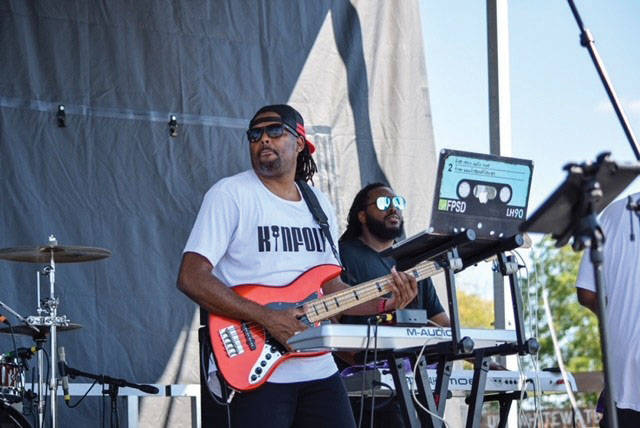
In addition to his interest in criminal justice and law, Saffold has had a lifelong love of music, starting as a child when he played music with his family in church. In Madison, he started an R&B band called Kinfolk. Before the popular band disperses as Saffold and another member leave Madison, Kinfolk will have two more performances: June 18 for Concerts on the Rooftop and June 19th for a Juneteenth celebration at the High Noon Saloon.
What would Corey Saffold most want people to learn from his story? “Nothing kills hopes, dreams, and desires faster than doubt. Do not minimize the greatness in you. We have to strive to live up to our full potential and help the people around us live up to theirs.”